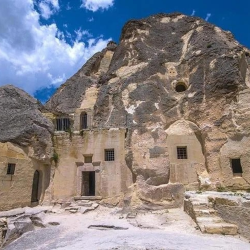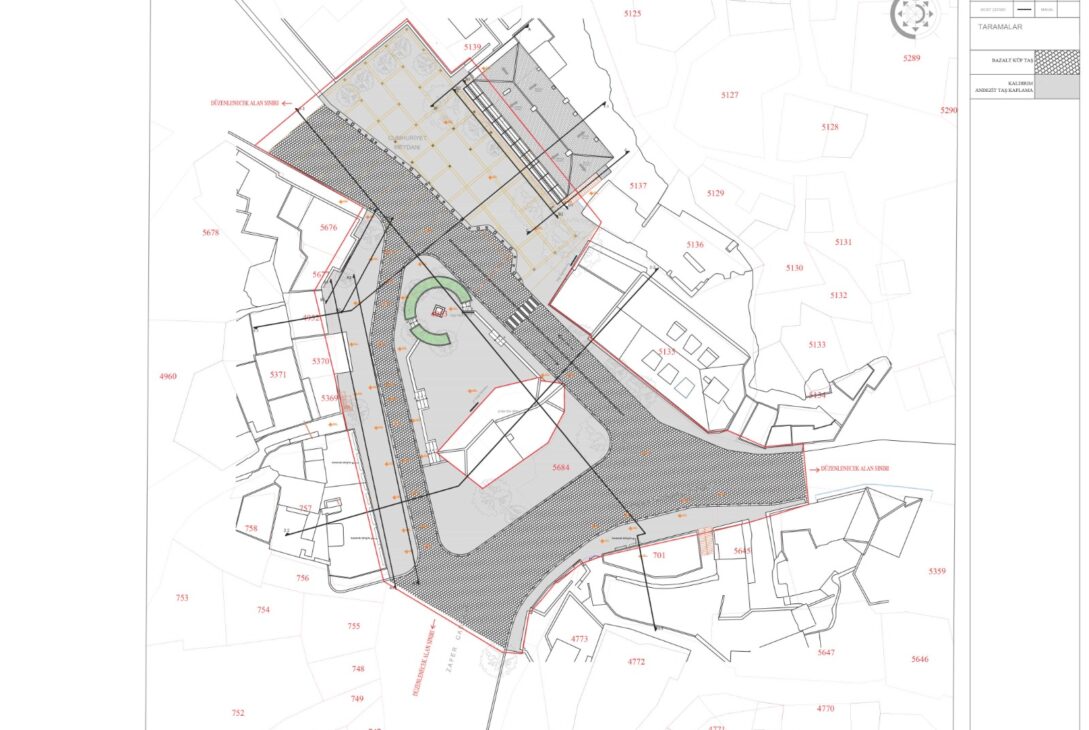
Located in the heart of Cappadocia, Mustafapaşa Village is one of the least altered settlements in the region and exhibits architectural and urban characteristics that are highly compatible with the natural environment. Until the Population Exchange of 1924, Christian Greeks and Muslim Turks lived together in this village, which has preserved its cultural and historical richness to the present day.
For this historic village, the village square—serving as a meeting point and shared living space for residents, local tradespeople, and visitors—is of vital importance. Its ability to meet contemporary needs is particularly crucial, given Mustafapaşa’s location within a major tourism region. Indeed, Mustafapaşa constitutes an important part of the steadily developing tourism activity in Cappadocia.
With its churches, madrasas, and examples of civil architecture such as historic mansions, Mustafapaşa attracts an increasing number of tourists each year. This growth results in higher vehicle and pedestrian traffic, placing significant pressure on the village square, one of Mustafapaşa’s most frequented spaces.
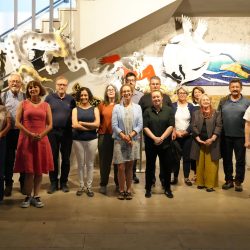
The aim of this project is to adapt the village square of Mustafapaşa to present-day conditions while preserving its historical character and its harmony with nature. For this purpose, an interdisciplinary team of experts in Urban and Regional Planning, Architectural Restoration, and Art History has been formed.
Within the scope of the project, historical documents related to the square will first be examined, and a comprehensive literature review will be conducted. In light of these studies, an urban design process for Mustafapaşa Square will be carried out in a manner faithful to its original character and natural context. Following the design phase, the project will proceed to the implementation stage. The proposed design will be realized using materials specific to the region.
At the end of the project, a square that best reflects Mustafapaşa’s urban identity—shaped by its natural, cultural, and historical values—will be created. In this way, Mustafapaşa’s tourism potential will be enhanced, and by securing a greater share of Cappadocia’s tourism, the economic prosperity of the village will be increased.
Project Team
Dr. Faculty Member Halil İbrahim Ünser
Dr. Faculty Member Leila Akbarishahabi
Lect. Dr. Şükran Ünser
Lect. Aytülü Dırık
Architect Ali Dırık
Interior Architect Valeska Wegner
Architect Nail Uslu
Architect Ali Köse