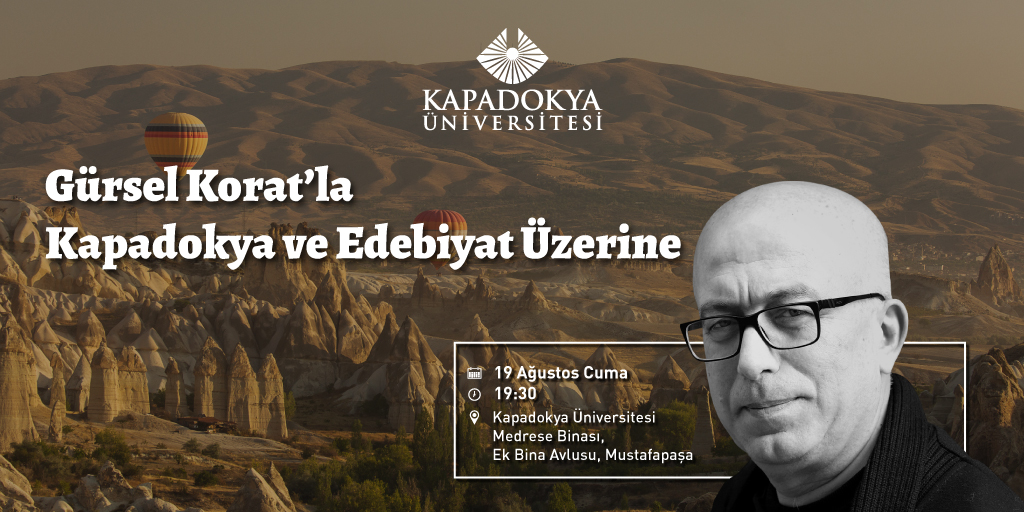
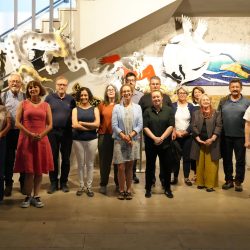
Gürsel Korat, one of the important writers of Turkish literature, was a guest of our university for two weeks to work on the final part of his novel series known as the “Cappadocia Quartet.” He was accompanied by his wife, academic and writer Tuğba Çelik, who also continued her own writing activities during this period. Various meetings were held during this time, where the writers shared their writing experiences with our center and KÜN faculty members. In addition, two open-to-external participants were invited to participate. The first, “With Gürsel Korat on Cappadocia and Literature,” took place on August 19, 2022, in the courtyard of the KÜN Medrese Building’s annex; the second, “Being in Cappadocia: The Relationship Between Literature and Place with Gürsel Korat and Tuğba Çelik,” took place on August 25, 2022, in Saklı Vadi, one of the natural beauties of Mustafapaşa.
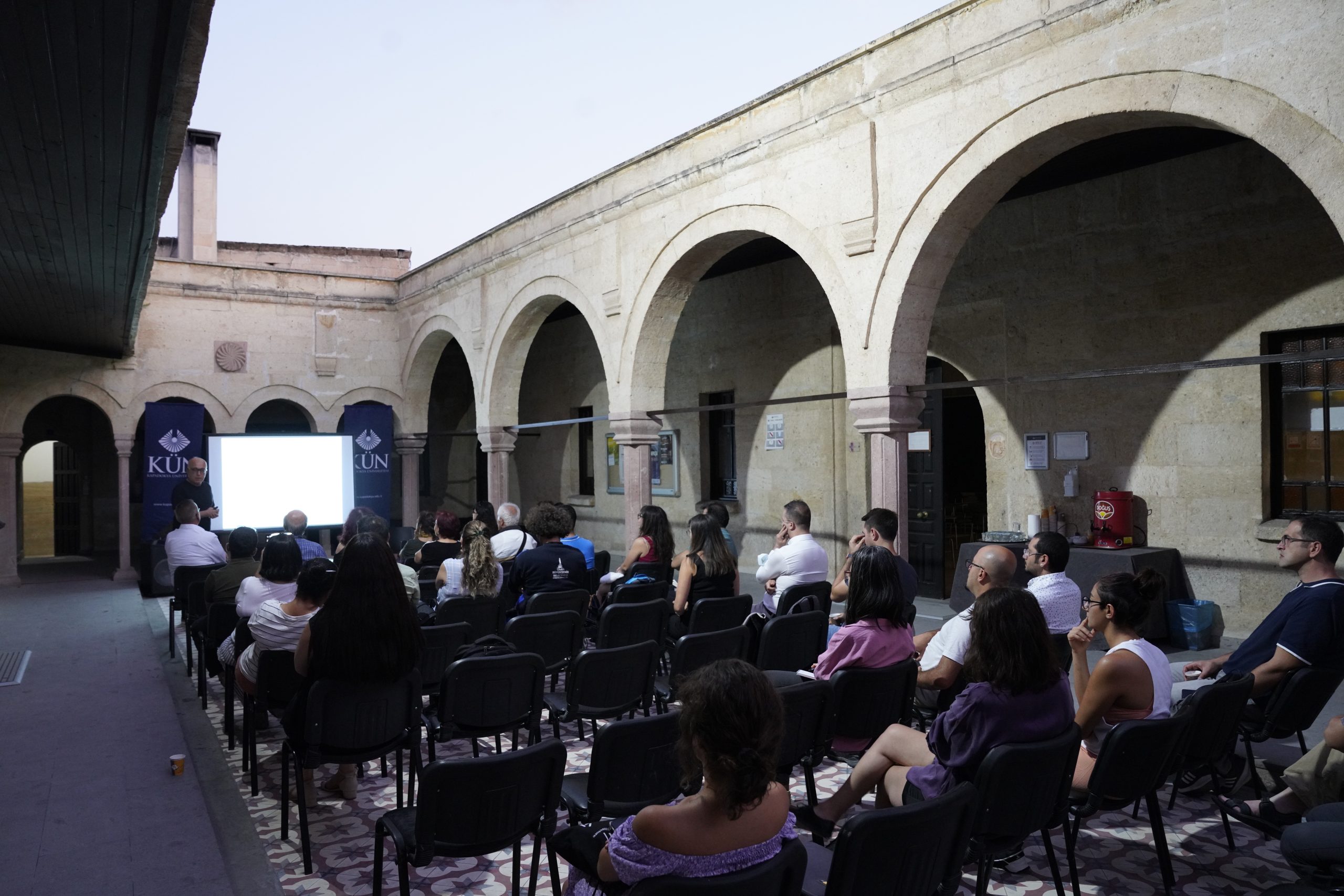
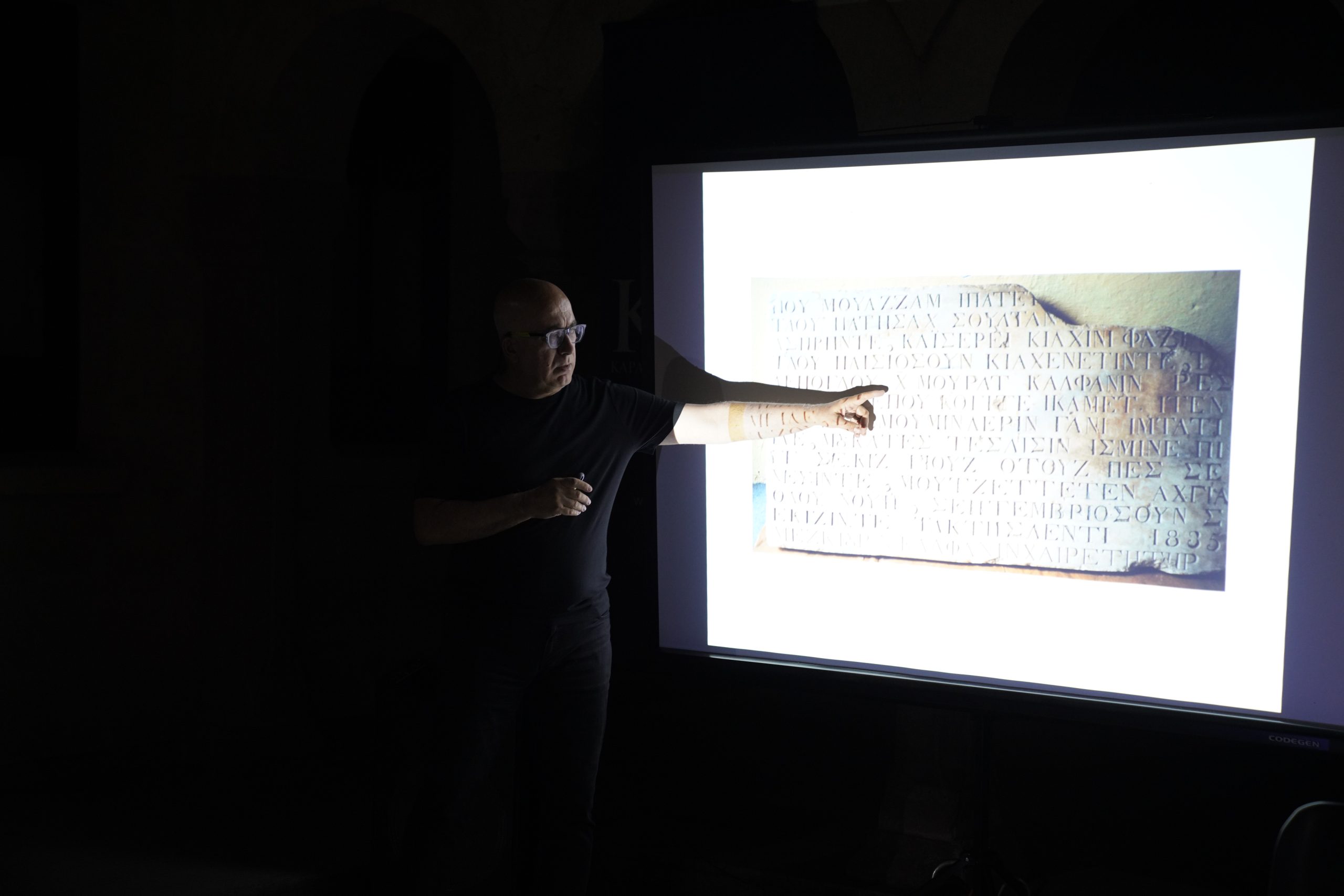
The first event, a talk titled “Gürsel Korat on Cappadocia and Literature,” attracted the interest of our university professors and students, as well as literature enthusiasts living in the region. During the talk, Korat discussed the authors who influenced his style in the creation of his Cappadocia Quartet, explaining how the spoken language of the Cappadocia region enriched his works, and describing his efforts and methods to carefully incorporate this language in his writings to best reflect the cultural fabric of Cappadocia. Korat also provided information about works that exemplify the historical and cultural fabric of the region.
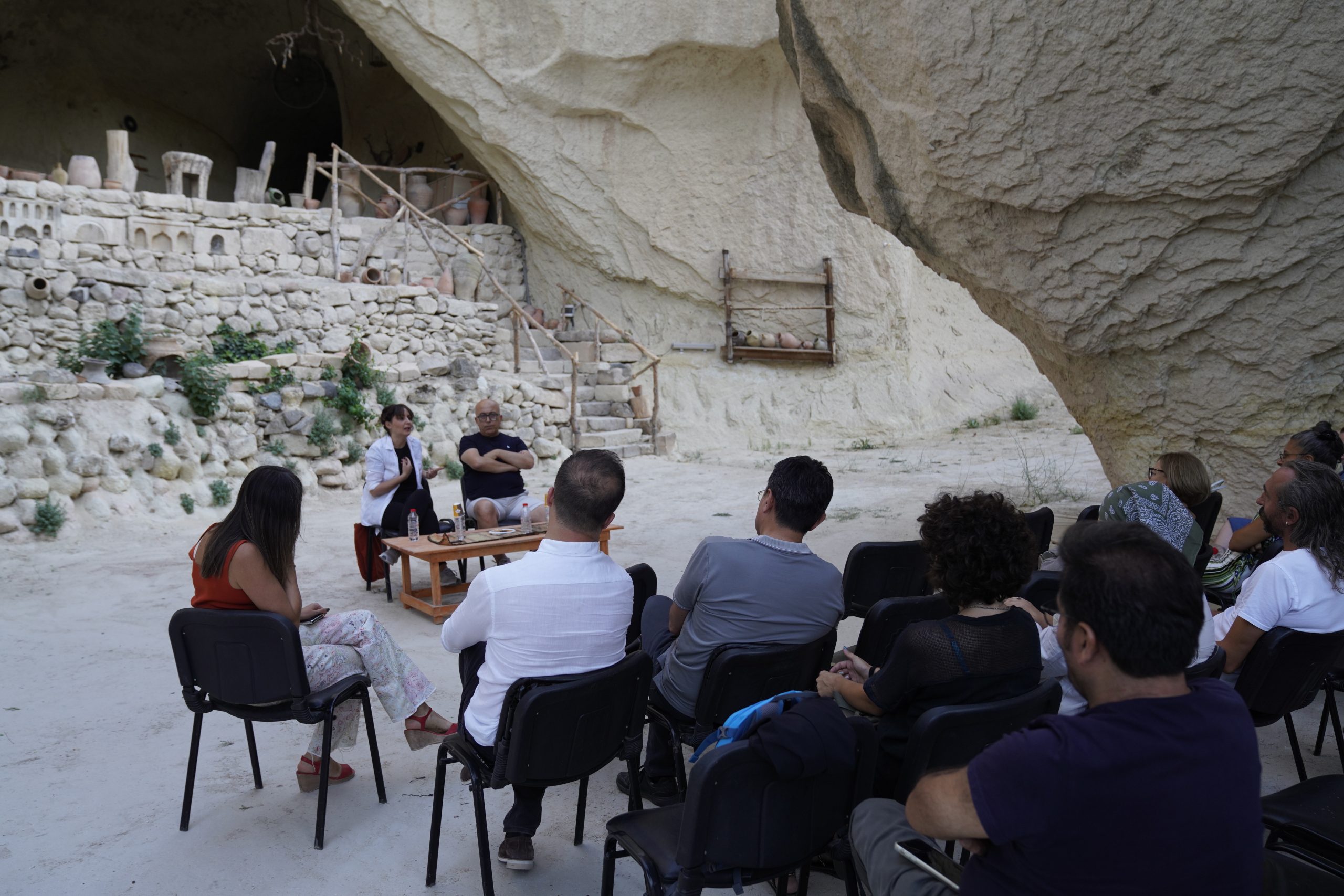
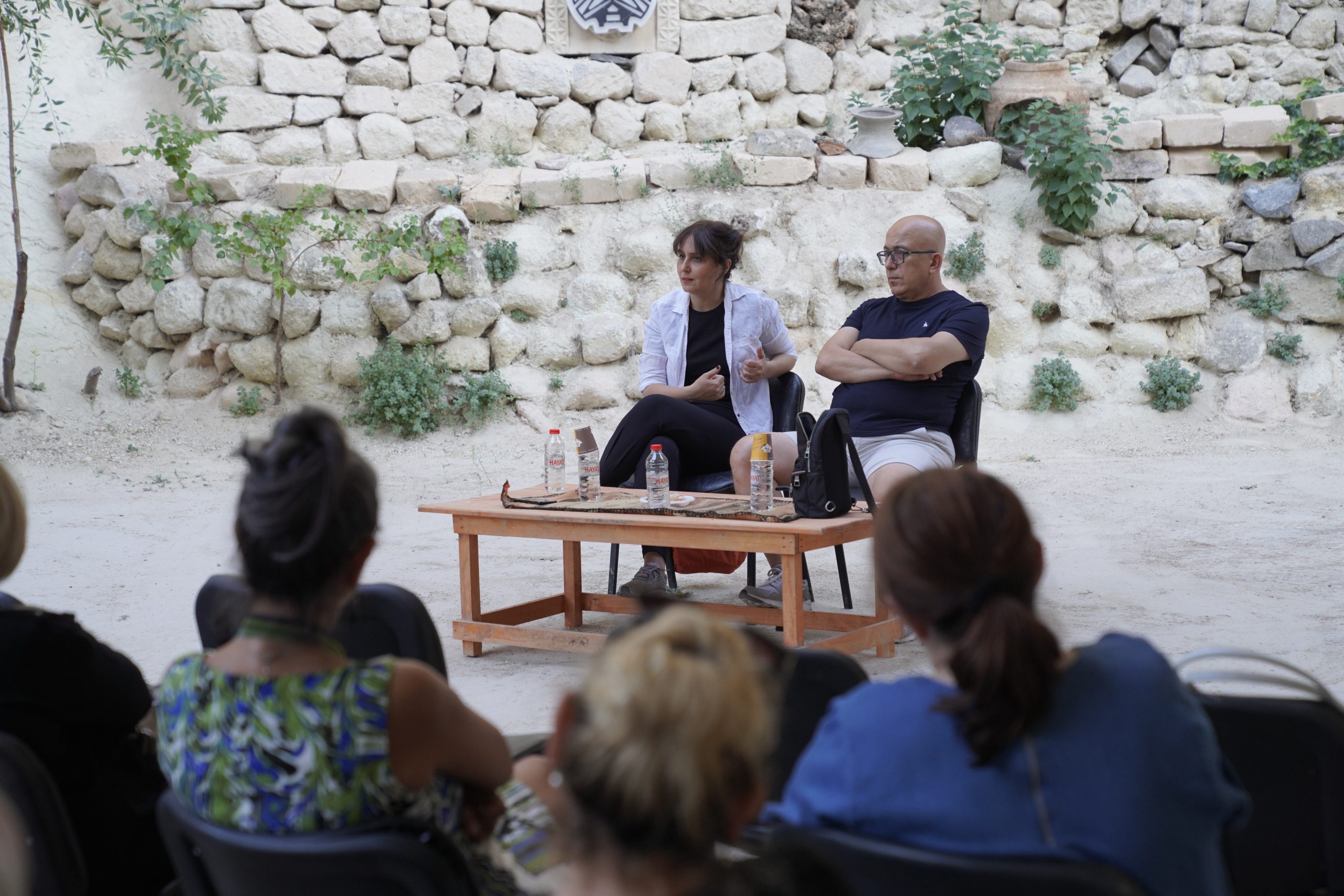
The second event, a talk titled “Gürsel Korat and Tuğba Çelik on the Relationship Between Literature and Place,” took place in Saklı Vadi, one of Mustafapaşa’s hidden natural beauties. During the talk, the influence of place on the act of writing was discussed, particularly in the context of Cappadocia, where the authors reside. During the discussion, which mentioned names such as Maurice Merleau-Ponty, Jacques Derrida, Virginia Woolf, Marcel Proust, Yaşar Kemal, and Tolstoy, the authors explored their relationship with the place. Korat stated that Cappadocia generally takes him to the past, while Çelik, conversely, takes him to the future. The authors also expressed that the serene, quiet, and mystical atmosphere of the Cappadocia region has an inspiring effect and is very fruitful for their writing activities.
The discussions once again demonstrated that Cappadocia is an important center not only for its historical and natural beauties but also for its powerful atmosphere that inspires literature and art.