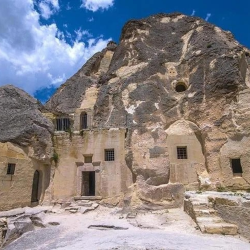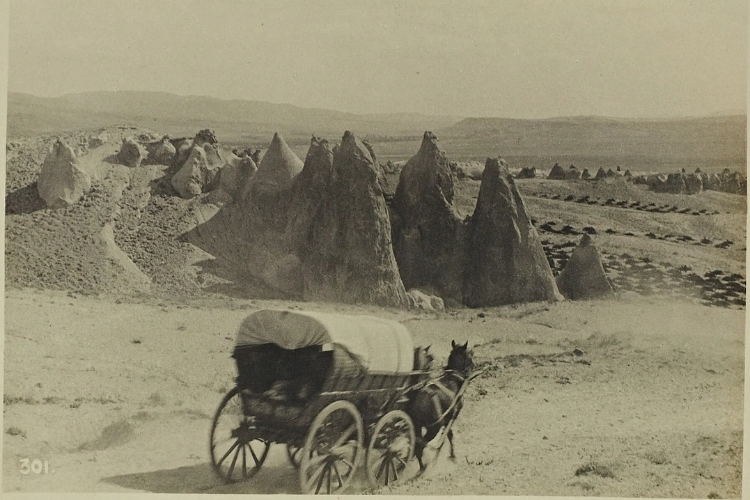
Nevşehir, the capital of Cappadocia, with its unique nature and historical texture, was also an important route for postal transportation during the Ottoman period.
Nevşehir, the capital of Cappadocia, with its unique nature and historical texture, was also an important route for postal transportation during the Ottoman period.
Exactly 135 years ago, in 1895, a postal carriage in Cappadocia has survived to this day thanks to documents found in Ottoman archives. These carriages, pulled by two horses along paths adorned with fairy chimneys and vineyards, stand out as one of the indicators of the Ottoman tradition of fast and regular communication.
In the Ottoman Empire, those who carried long-distance mail were called “Tatars.” Tatar men were known for their resilience in the harsh conditions of long horseback journeys and against bandits; they were especially preferred for postal transportation. This system is considered one of the fundamental elements that enabled the Ottoman Empire to survive for six centuries across three continents.
Postal Tatars on the Roads of Cappadocia in the Ottoman Empire: A Historical Journey in Nevşehir
Postal Tatars tirelessly delivered news from one end of the empire to the other, changing horses at staging posts as needed. Sometimes, when they couldn’t find horses, they had the authority to use horses from the governor’s stables. This ensured the communication system operated almost without interruption, contributing to the state’s rapid decision-making.
Until 1927, mail was delivered to Nevşehir in Tatar carts. The security of the Tatars during this transport was provided by cavalry gendarmes. Postal transportation continued in Nevşehir using Tatar carts or animal-drawn carriages until the 1930s.
Today, Tatar carts, found in Ottoman archives and images, retain their historical significance not only as a means of transportation but also as a symbol of the empire’s extensive communication network and security system.
These roads, stretching through the natural beauties of Cappadocia, stand out as historical places where state messages were once carried, and where speed and courage met.