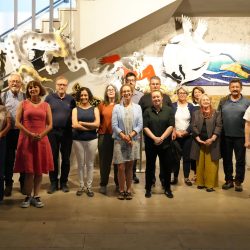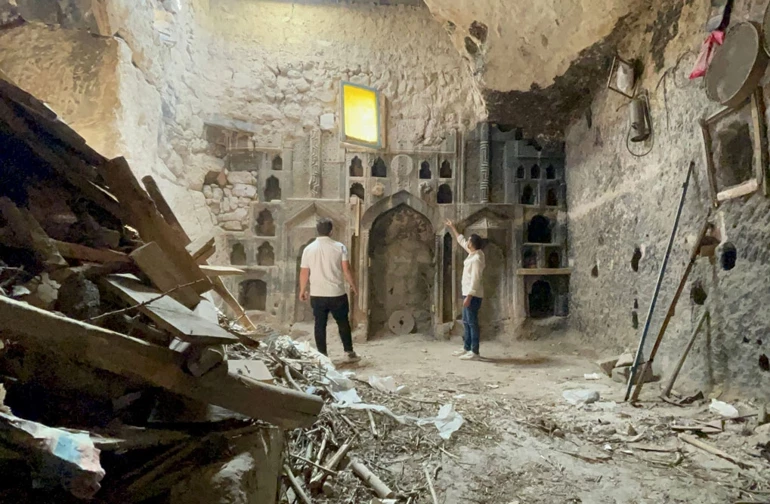
Faculty members from the Art History Department of the Faculty of Arts and Sciences at Nevşehir Hacı Bektaş Veli University (NEVÜ) conducted a surface survey in the village where the 16th-century Taşkınpaşa Madrasa and Mosque are located.
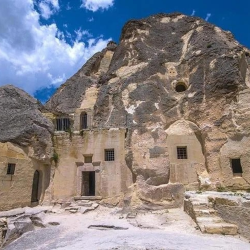
During the study, the team cleared and cleaned a rock-carved space that a villager had been using as a woodshed, uncovering the place of worship, which also included a 600-year-old stone-worked mihrab (prayer niche).
Associate Professor Savaş Maraşlı, one of the researchers, told journalists that there was no information in any literature about the unearthed structure and that it bore traces of the Eretna Beylik period.
Maraşlı stated that the area, besides being a place of worship, also contains traces of a living space, saying, “In this region, since the 1960s, the mosque, tomb, and dervish lodge of the complex have been deciphered, especially by art historians. However, nobody mentions this particular structure. It is actually 600 years old, a structure that has been brought to light for the first time, and has been preserved in this way because it was hidden. It was made with decorations, materials, and a technical understanding that we have been familiar with since the Seljuk period and continued during the Beyliks period.”
He continued. Altın, noting that research on the structure and its surroundings will continue, said:
“We will conduct research on these and try to determine what purpose this place was used for. We don’t know exactly if it was used as a mosque, but at least we can say that prayers were performed here functionally because there is a mihrab. The Ürgüp Museum Director had organized a symposium for us. He mentioned the existence of such a structure there. Afterwards, we found our uncle Mehmet during Professor Savaş’s surface survey. Uncle Mehmet kindly opened the structure to us. The interior was not visible, so we asked him to clean it, and it was thus revealed. It’s actually a pristine place. With the work we are doing here, we plan to further reveal the function and decorations of this structure.”
The homeowner, Mehmet Ersen (63), also stated that some tourists who came to the area when he was a child had mentioned the mosque to them, but no work had been done until today.
SOURCE: Hürriyet Newspaper, November 12, 2025