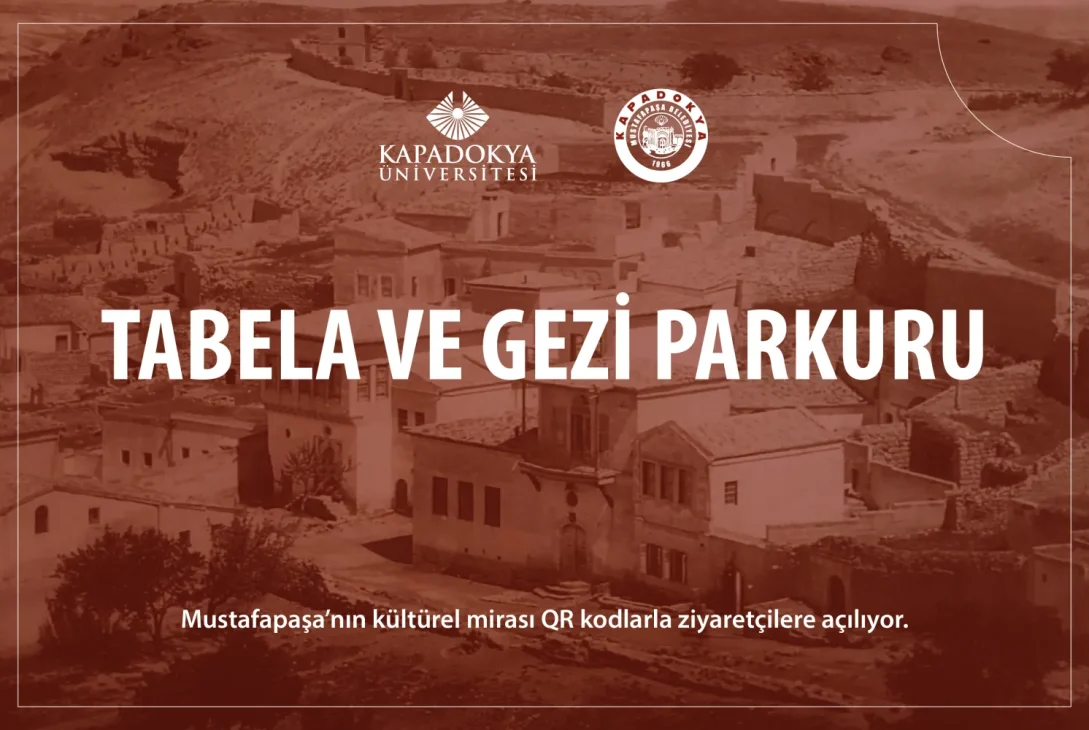
Supported by the Cappadocia University Scientific Research Projects (BAP) Commission between 2020-2022 and carried out within our center, the “Mustafapaşa Signage and Promotion Project” has borne fruit. With the signage implementation launched this year following comprehensive research and infrastructure works, Mustafapaşa has transformed into an open-air cultural space discovered through its stories still passed down from generation to generation, its social memory, and its stone architecture.
History and Technology Together In the first phase of the project, assets with natural and landscape value in Mustafapaşa and structures of cultural significance such as stone mansions, mosques, madrasahs, churches, bridges, and fountains were identified. The histories of these structures were extracted from sources, and their old and new photographs along with short stories were compiled. This rich data pool collected was made accessible on the mustafapasakapadokya.org website, which serves in Turkish and English for academics, virtual travelers, and tourists wishing to prepare prior to their visit.
At the point reached today, this digital infrastructure has integrated with the physical space. Thanks to the QR-coded signs placed on the historical structures in the region, visitors can instantly access the history, architectural features, old photographs, and tour routes of the structures in both languages via their smartphones.
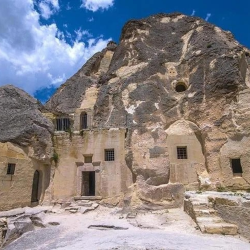
A Multicultural Heritage: Sinasos Mustafapaşa (formerly known as Sinasos), which also hosts the main campus of Cappadocia University, is one of the leading settlements that best reflects the multicultural past and stone architectural heritage of Cappadocia. With hundreds of registered structures dating from the Middle Ages to the Ottoman and early Republican periods, the town carries the shared memory of Muslim and non-Muslim communities and the cultural richness formed after the population exchange to the present day. This historical and cultural value of the town was also registered internationally when it was selected among the “Best Tourism Villages” by the United Nations World Tourism Organization (UNWTO) in 2021.
Contributions of the Project to the Region The main objectives of this comprehensive project, implemented under the leadership of Cappadocia University, are as follows:
- To increase tourism diversity by making the historical structures in the region visible.
- To extend visit durations by offering visitors an interactive and fulfilling experience.
- To provide a sustainable contribution to the local economy through increased and high-quality tourism mobility.